Product offerings for other industrial wastewater and ZLD applications

For industries outside the auto ancillary and pharma pages, SARTIME positions ZLD as a chemistry-led recovery system. Every wastewater is first understood by its source chemistry; only then are source reduction, ETP, RO, reuse, evaporation, detoxification or resource recovery selected.

Chemistry-Led ZLD for Mixed Industries

SARTIME's offering for other industries starts with the principle that wastewater cannot be treated as one generic stream. Textile, paint, solar, electroplating, chemical, fibre, composting, utility reuse and custom industrial wastewater each fail for different reasons. SARTIME therefore identifies every wastewater by its chemistry and then builds the treatment route around the required reuse quality.

This approach prevents the common mistake of adding more equipment without correcting the source problem. The solution may involve source reduction, segregation, biodegradability study, ETP correction, high-recovery RO, polishing, evaporation, STP reuse, pond-water reuse, detoxification or resource recovery depending on the stream.

All types of industries wastewater identified by chemistry before solution selection 95+% RO recovery recovery target used for economic ZLD design where feed quality supports it MB <2 ppm high-grade recovered water quality included in SARTIME's reuse capability 50% water reduction water consumption reduction identified through audit-based improvement 24x7 availability plant operation positioned for continuous industrial water recovery Less evaporator load RO reject reduced before the highest-energy ZLD step
SARTIME all-industries ZLD chemistry map
Image O1: SARTIME all-industries ZLD map showing chemistry-led solution selection.

Four-Step Strategy for Reliable ZLD

SARTIME's four-step strategy is the backbone for cross-industry ZLD. The route is source reduction, effluent treatment, reverse osmosis and evaporator. The first two stages are deliberately placed before RO and evaporation because they eliminate pollution at lower cost instead of pushing untreated load into expensive concentration stages.

This strategy is used when a plant has already installed ETP, RO and evaporator assets but still cannot operate reliably. SARTIME studies raw materials, process sources and existing treatment behavior so the plant is corrected as a complete treatment system, not as isolated equipment.

4 treatment steps source reduction, ETP, RO and evaporator integrated as one ZLD process First 2 steps critical source and ETP stages reduce load before membrane and thermal concentration 30% less COD source reduction target shown before downstream concentration 85-90% load reduction effluent treatment stage positioned before RO recovery <1,000 ppm load treated stream target before recovery in the four-step strategy Equipment-only additions avoided ZLD corrected by source, chemistry and process integration
Four-step ZLD treatment strategy diagram
Image O2: Four-step strategy showing the missing source-reduction link in ZLD.
Four-step ZLD flow chart
Image O3: Source reduction and ETP reduce load before RO and evaporator.

Water and Pollution Audit

SARTIME's audit offering is used before a plant commits to new treatment equipment or plant expansion. The audit maps water consumption, wastewater sources, pollution load, reuse possibilities and the existing plant's operating bottlenecks. It also supports feasibility study and tender-stage treatment decisions.

For other industries, this is often the most practical starting point because the same factory may contain process water, utility water, STP water, rainwater, chemical wastewater and RO reject. SARTIME's audit converts that scattered picture into a water balance and a treatment plan.

50% water reduction reduction in water consumption identified by audit-led improvement Water balance prepared plant sources and reuse opportunities mapped before design Pollution audit included pollutant load tracked before treatment selection Feasibility before proposal study used before tender documents and system proposal Existing system reviewed operating plant studied before revamp recommendation Reuse targets fixed treatment selected from the required water quality, not habit

One Water, STP and Pond Water Reuse

SARTIME's reuse offering follows the One Water concept: water quality matters more than where the water was previously used. Treated sewage, harvested rainwater and pond water can be converted into planned industrial water sources when the treatment train is designed for the target use.

The aim is to protect fresh water for people use while treated water serves process and utility duties where the required quality is achieved. For industries facing constrained supply, this is not a side activity; it becomes part of the circular water economy of the plant.

240 KLD sewage treated STP water upgraded for industrial process and utility reuse 95% pond water reused harvested pond water recovered after treatment Operating since 2018 pond water reuse system running without interruption ACF to UF direct flow intermediate tank removed between carbon filter and ultra filtration Fresh water protected treated water assigned to suitable industrial duties Scrap water concept used water treated as recoverable resource, not waste
One Water circular reuse concept
Image O4: One Water concept: reuse based on quality, not water history.
STP water reuse flow scheme
Image O5: Treated sewage reuse flow scheme for process and utility water.
Pond water treatment system
Image O6: Pond water treatment system for industrial reuse.

Process Intensification for Existing Plants

SARTIME's process intensification offering is for factories expanding in the same location with very little space left for ETP. Instead of adding more conventional tanks, SARTIME re-looks at the process and converts bulky tank-and-stirring arrangements into smaller, cleaner and more energy-efficient treatment arrangements where chemistry allows it.

This offering is especially relevant for existing plants that need higher capacity, lower chemical consumption, lower footprint or easier operation without rebuilding the whole treatment plant.

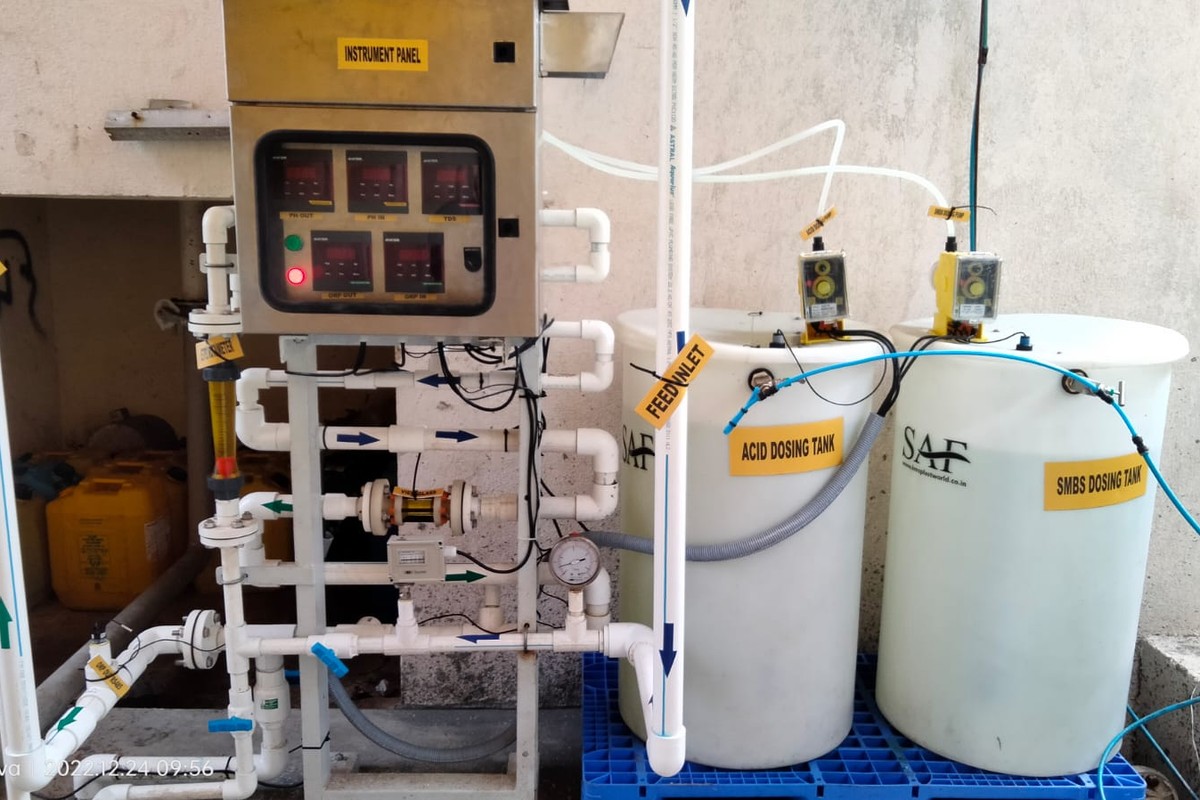
95% space saving conventional tanks and stirring replaced by compact pipe arrangement 40% less SMBS chemical wastage reduced through process intensification No electrical connections pipe-based arrangement avoids powered mixing equipment Maintenance-free arrangement conventional stirring maintenance removed where applied More systems in same space compact treatment layout supports plant expansion Source reduction option ETP load reduced before equipment enlargement is considered
Process intensification pipe arrangement
Image O7: Process intensification replacing conventional tank-and-stirring arrangement.

Biodegradability, Feasibility Study and Detoxification

SARTIME's complex chemical wastewater offering is used where the treatment route cannot be selected from COD, TDS or pH alone. The work begins with biodegradability and feasibility study, then evaluates whether detoxification, coagulation, filtration, adsorption, membrane separation, oxidation, precipitation, biological treatment or recovery is the right route.

This product offering is relevant for specialty chemicals, paints, solvents, fibre, textile and other complex industrial streams where the wastewater must be understood before the equipment is chosen.

20+ treatment methods physical, chemical, biological and membrane routes screened Detoxification system reactor-based treatment used for complex chemical wastewater Biodegradability checked biological route confirmed before design commitment Feasibility before plant treatability study completed before full-scale selection Custom chemistry route solution selected from actual wastewater behavior Equipment risk reduced plant design based on validated treatment response
Detoxification system
Image O8: Detoxification system used for difficult chemical wastewater.

Isocyanate / Drum-Wash Wastewater Handling

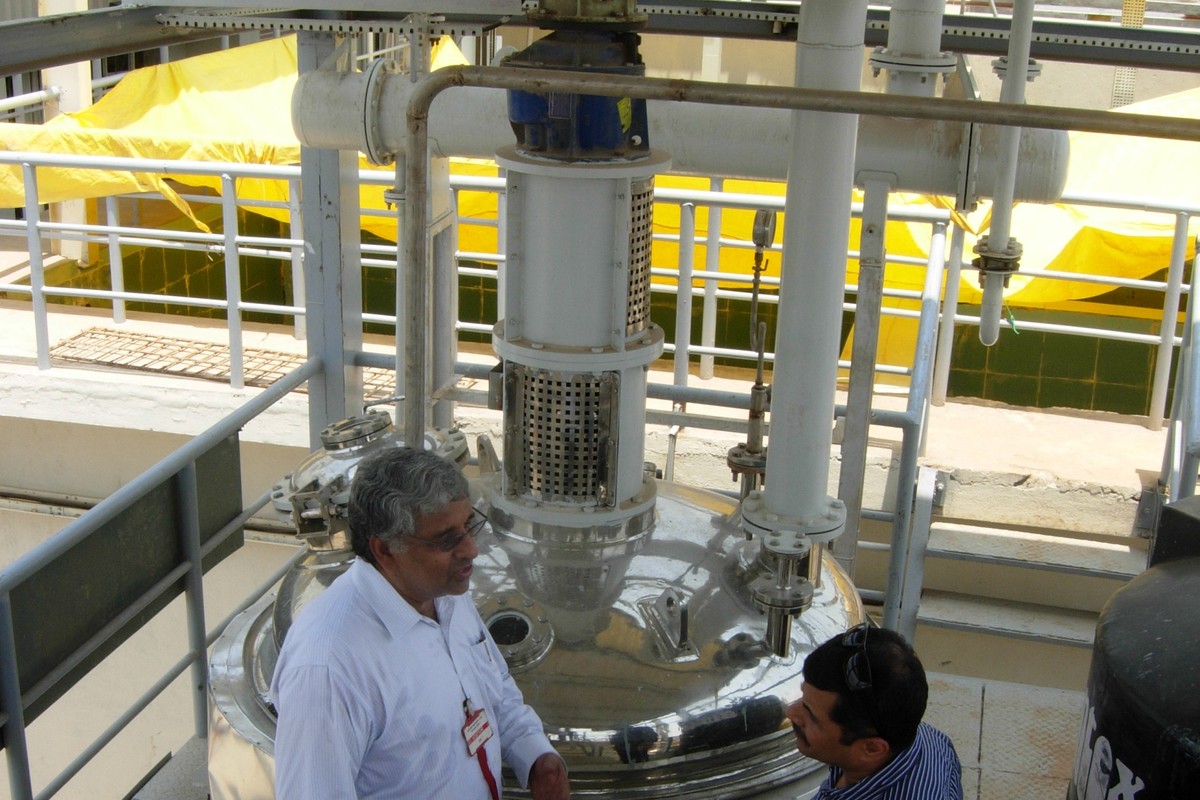
SARTIME's isocyanate wastewater work addresses drum washing and similar difficult handling cases where the wastewater problem starts at the cleaning method itself. The study evaluated MDI behavior in water with salt addition and proposed high-pressure spray washing to dislodge material from the drum.

The offering is practical source control: change how the waste is generated, reuse the washing water for a defined operating window, and reduce the load entering treatment.

0.5 g MDI bench test quantity mixed in 150 ml pet jar 0.5%, 1% and 5% salt salt addition checked during hardening study 5 hours MDI granules hardened after contact period High-pressure spray proposed to dislodge MDI from drums 4-5 days reuse washing water reuse window proposed for operation Source load reduced drum-wash practice corrected before downstream treatment
Isocyanate drum washing wastewater
Image O9: Drum-washing wastewater study for isocyanate handling.